Recent matches · Real purchase order
Dota 2 pro builds: read the match, not just the list
Compare role, lane, starting inventory, item timings, and talent choices from recent professional matches. Copy the reason behind a build—not six items stripped of their game state.
Reviewed August 29, 2026 against the current DotaSense Desktop pro-build view and its OpenDota data path. Match parsing, patches, and data availability can change.
The view labels its sample size, source window, and cached fallback.
Compare the job and matchup before comparing the purchase order.
A reference match is evidence, not an instruction to buy every item.
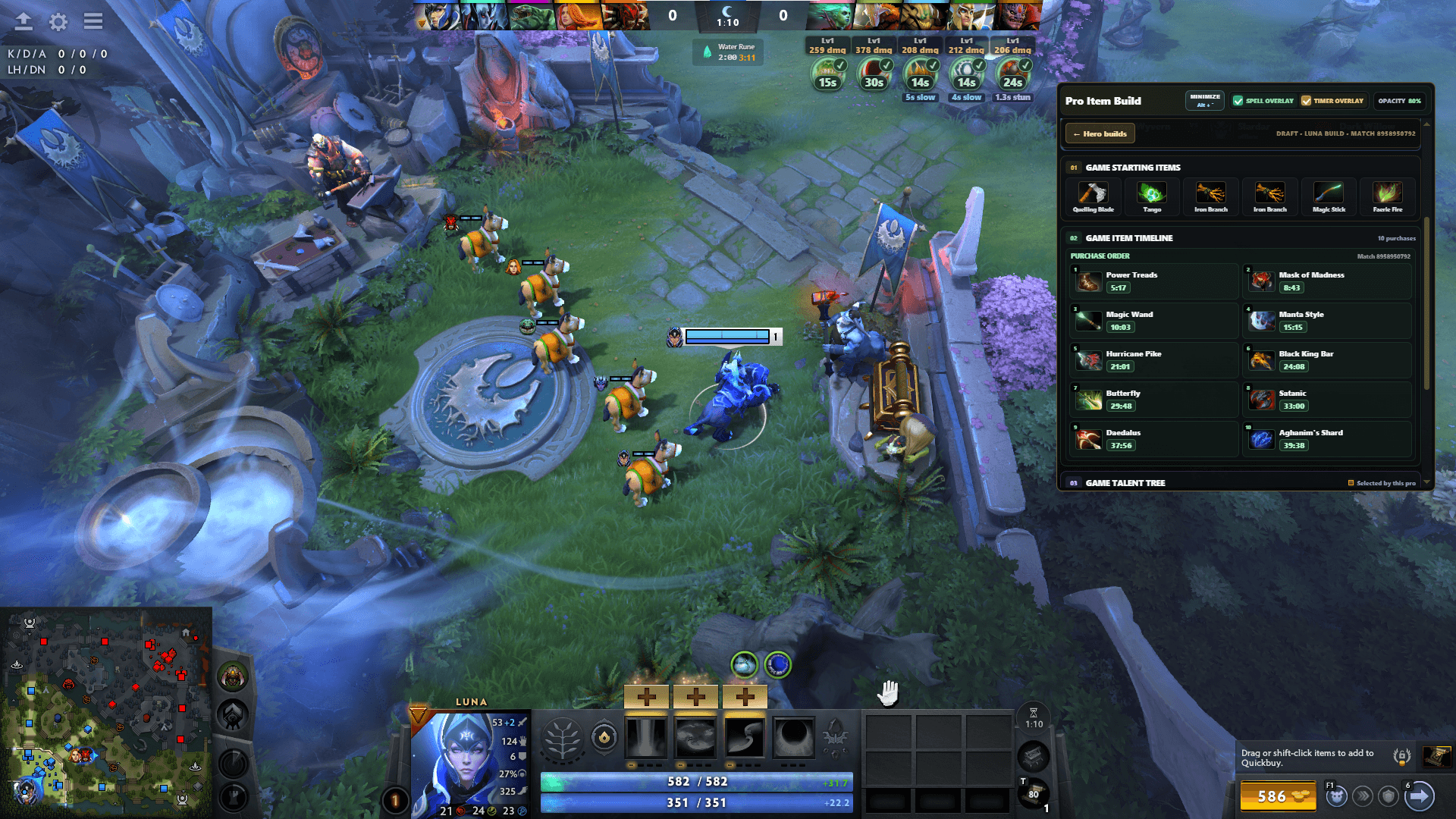
What the pro-build view shows
Recent pro games
Player, team, competition, date, duration, role, result, lane context, and early item timings.
Starting items
The actual opening purchases from the sample or selected match—not a generic role shopping list.
Item progression
Repeated build paths across the sample, or the purchase order and timing from one selected game.
Talent tree
The parsed talent selections from a selected match when those records are available.
A five-step pro-build check
Match the role
Carry, mid, offlane, and support paths solve different resource and positioning problems.
Match the lane
Check partner and opponents. A build for a free lane can fail in a lane that needs immediate sustain.
Read the order
Starting items and components explain more than the final six slots.
Name the job
For each purchase, name the farm, access, survival, control, or damage problem it solved.
Find the mismatch
If your draft, lane, or next objective differs, adapt before buying the next component.
Use the item-build decision guide when you know the common path but need to choose the next item for your match.
Read the match behind the items
| Visible evidence | Question | Reason to adapt |
|---|---|---|
| Role and lane | Did this player have the same farm and matchup job? | Your lane needs earlier sustain, movement, or wave access. |
| Purchase time | What event did the item arrive before? | Your timing is later, so the original fight window has passed. |
| Item sequence | What did the first item make possible? | The enemy mechanism stopping you is different. |
| Talent choice | Which play pattern did the talent support? | Your build, targets, or positioning job changed. |
| Win or loss | Did the build work, or merely appear in the game? | One observed result does not prove the choice caused it. |
Data and interpretation limits
These are parsed match patterns. They do not know your execution, team communication, bracket, exact game plan, or future patch.
- Sparse heroes or roles: when the role sample is too small, DotaSense labels an all-role fallback instead of hiding the gap.
- Missing records: purchase logs or talent choices can be incomplete, and OpenDota can be unavailable or rate-limited.
- Cached data: a cached fallback is labeled. Recheck the source window before treating a path as current.
- Patch changes: verify current items, talents, facets, and interactions in Dota and review Valve’s gameplay updates.
Dota 2 pro builds FAQ
Where does DotaSense get pro build data?
The desktop view uses recent parsed professional-match data from OpenDota and labels the sample size and source window.
Does it show actual item purchase times?
Yes, when the selected match contains parsed purchase data. The match view shows starting items and the recorded item sequence with times.
Can it match the lane?
It can use the selected role, lane partner, and opponents to rank similar historical lane contexts. If no lane passes the similarity check, it says so.
Should I copy the most common build?
Use it as a hypothesis. Keep it only while the lane, threats, resources, and next objective still support the same item jobs.